

A solo trivia game is a single-player quiz format where you answer questions against a timer, a ladder, or an endless run instead of competing head-to-head. The fastest way to try one: open a free app or web quiz, pick a category like movies or anime, and start a short timed round. On Flicksy, that means jumping into Solo Arena, which typical timers run within a range suitable for fast-paced play.
TL;DR:
- Many apps offer adjustable timers and difficulty settings to accommodate players with varying reaction speeds and skill levels.
- Offline mode and low-data play are crucial for sustained access, especially for users with limited connectivity or data plans.
- Content freshness, including current releases and niche fandoms, keeps solo trivia engaging and prevents question bank staleness.
- Different modes like timed rounds, ladder runs, daily questions, and endless play suit various goals, from quick warm-ups to long-term skill building.
- Accessibility features such as text contrast, font size, timer flexibility, and colorblind indicators expand the game's inclusivity and user base.
Table of Contents
- What separates solo trivia from multiplayer, and what topics show up most
- What to look for in a genuinely good solo trivia app
- Timed rounds, ladders, daily questions, and endless runs: which mode fits your mood
- How to pick a session and start playing in under two minutes
- How to actually get better at solo trivia
- Making solo trivia work for every kind of player
- Why Flicksy earns a spot in your solo trivia rotation
- Where to try solo trivia or dig deeper
- Ready to play your first solo round?
- Sources
What separates solo trivia from multiplayer, and what topics show up most
Solo trivia strips away the waiting room. There's no lobby, no matching with strangers, no pressure to keep pace with a stranger's buzzer speed. You set the rhythm. Multiplayer trivia lives or dies on timing and other people showing up; solo mode lives or dies on whether the content is good enough to keep you coming back alone.
Category variety is where most solo trivia apps differentiate themselves. The strongest ones cover:
- General knowledge and current events
- Movies, TV shows, and anime (often broken into franchise-specific decks)
- Music, from decade trivia to soundtrack recognition
- Science, history, and geography
- Niche fandoms: specific shows, actors, or extended universes
Question formats vary just as much as topics. App Store listings for trivia games commonly advertise multiple choice, true/false, and image-based questions, layered with timed rounds and tiered difficulty ladders. Some apps also run recall-style prompts where you type an answer instead of picking one, which tends to test knowledge more honestly than tapping a familiar-looking option.
Where you find these categories matters less than it used to. Web-based quizzes work fine for a quick break at a desk. Mobile apps dominate for daily habit-building, especially ones with a "question of the day" feature that takes 30 seconds and doesn't ask for anything else.
What to look for in a genuinely good solo trivia app
Most solo trivia apps look similar on the surface. The differences show up once you've played for a week.
- Adjustable difficulty and timers. A fixed 15 second timer is brutal for image questions and too slow for true/false. Look for apps that let you tune both.
- Flexible session length. Some days you want a 90 second warm-up; other days you want to burn 20 minutes. Good apps support both without forcing a mode switch.
- Offline or low-data play. Not every quiz needs a live connection, and apps that cache question packs locally save you from a stalled loading screen on a slow network.
- Optional sign-in. Solo mode design across trivia platforms increasingly treats account creation as optional, storing streaks and stats on-device so you can play anonymously if you want.
- Real progress tracking. Private stats, streak counters, and category-level accuracy breakdowns turn a one-off quiz into something you actually improve at.
- Fresh content. Recycled question banks get stale fast, especially in fast-moving categories like current TV releases.
- Fair monetization. Occasional rewarded ads or optional cosmetic purchases are reasonable. Paywalls blocking basic categories are not.
Pro Tip: Before committing to an app, check its billing and privacy details on the platform's own support page rather than trusting marketing copy. It tells you exactly what sign-in unlocks and what stays free.
Timed rounds, ladders, daily questions, and endless runs: which mode fits your mood
Solo trivia apps tend to converge on four core modes, and each one solves a different problem.
- Timed quick rounds. Short, high-pressure bursts, usually 10 to 20 questions on a countdown clock. Best for a coffee-break warm-up or testing recall speed.
- Ladder runs. You climb tiers, and each correct answer raises the stakes while wrong answers can knock you back down. Ladder formats reward risk-taking and work well as practice for competitive play, since they mimic the pressure of a real match without another player watching.
- Daily single-question formats. One curated question a day, often with device-based streak tracking instead of a full account. Low commitment, high habit-forming potential.
- Endless arena or infinite runs. Questions keep coming until you miss enough to end the run. Built for score-chasing and beating your own personal best.
Match the mode to your actual goal. If you're learning a new category, ladders and daily questions work better than a frantic timed round. If you're warming up before a multiplayer match, a fast arena run gets your reaction time sharp in a few minutes.
How to pick a session and start playing in under two minutes
Getting into a solo trivia session shouldn't require research. Here's the fastest path:
- Open the app or site on whatever device is in front of you. Phone, tablet, browser, it doesn't matter.
- Pick one category that actually interests you. Motivation drops fast if the topic feels like homework.
- Set a timer length and difficulty that match your energy level right now, not your ambition.
- Decide whether you want to sign in for tracked stats or just play as a guest. Guest play is fine for a single session; signing in matters if you want streaks to persist.
- Run one short warm-up round and pay attention to the instant feedback on wrong answers. That's where actual learning happens.
- Save or share results only if the app's privacy settings make you comfortable doing so.
That's the whole setup. No tutorials, no forced onboarding walls, no reason it should take more than two minutes.
How to actually get better at solo trivia
Improvement in solo trivia comes down to targeted repetition, not raw volume. A short daily warm-up, five to ten questions on a tight timer, builds the kind of quick recall that a single long session never will.
Mix it up deliberately. Run general-knowledge rounds to keep broad recall sharp, then switch to a category drill (anime villains, 90s sitcoms, whatever you're weak on) to close specific gaps. Track your response time and accuracy by category if the app supports it. That data tells you exactly where to focus next, instead of guessing.
Set small goals. Beating yesterday's streak by two questions is more motivating than a vague "get better" target, and replaying missed questions cements what you got wrong the first time.
Pro Tip: Resist the urge to rush through easy questions just to pad your streak. Speed without accuracy trains bad habits that show up the moment you play against a real opponent.

Making solo trivia work for every kind of player
Accessibility in solo trivia isn't a checkbox feature. It determines whether someone can actually play the game.
Timer flexibility matters most. Fixed countdowns punish players with slower processing speed or motor limitations, so apps that let you extend or remove timers entirely open the game to a much wider range of players. Text size and contrast settings matter just as much for anyone with low vision, and image-based questions need alt text or audio description options for players who can't rely on visual recognition alone.
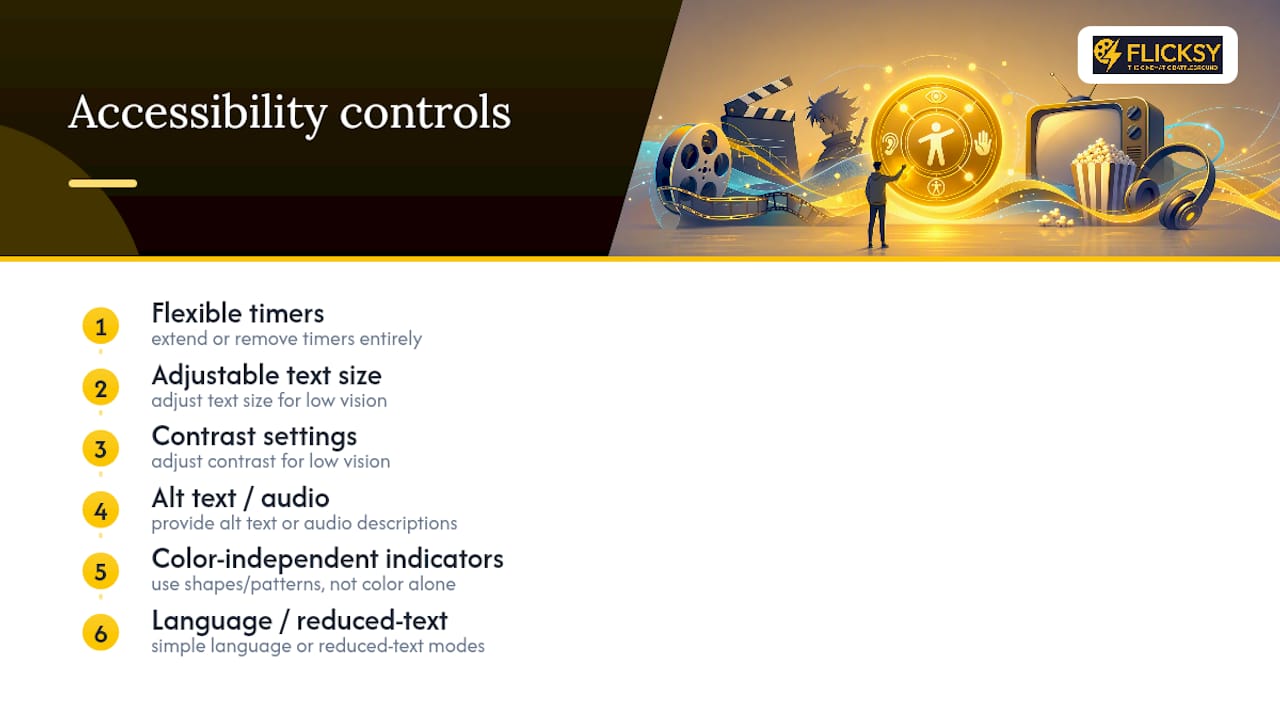
Colorblind-friendly answer indicators (shapes or patterns alongside color, not color alone) prevent a design choice from becoming a barrier. Simple language toggles or reduced-text modes help non-native speakers and younger players engage with the same content without feeling shut out.
Offline play deserves a mention here too. It's not just a convenience feature. For players with limited data plans or unreliable connections, it's the difference between playing daily and not playing at all. The best solo trivia apps treat these as core design decisions, not afterthoughts bolted on after launch.
Why Flicksy earns a spot in your solo trivia rotation
A solo trivia feature is often built around fast rounds, curated fandom content, and a private tracking system that doesn't require broadcasting your stats to anyone. Its speed-and-accuracy design forces the kind of quick recall that translates directly into better performance once you step into Blitz PvP or Couch Party with friends.
What sets it apart for movie, TV, and anime fans specifically is content depth. Flicksy's own editorial coverage, including reviews like its breakdown of The Odyssey, feeds directly into the kind of category expertise that makes quiz questions feel current instead of recycled from a decade-old trivia bank. Daily curated quizzes and daily rewards give players a reason to open the app regularly.
For anyone using solo mode as a warm-up before competitive play, that's a legitimate design advantage, not just a bullet point in an app description.
— Aakash
Where to try solo trivia or dig deeper
- Start a 1v1 Trivia Match: see how Blitz PvP builds on solo warm-ups.
- Spider-Man: Brand New Day Review: a sample of the movie coverage behind Flicksy's quiz categories.
- Apple's billing support page: check sign-in and purchase details before downloading any trivia app.
Ready to play your first solo round?
If you've been bouncing between generic quiz apps that recycle the same 500 questions, Flicksy solves a different problem: stale content in a category you actually care about. Its Solo Arena gives movie, TV, and anime fans rapid-fire rounds pulled from current releases and deep-cut fandom knowledge, not decade-old trivia decks.
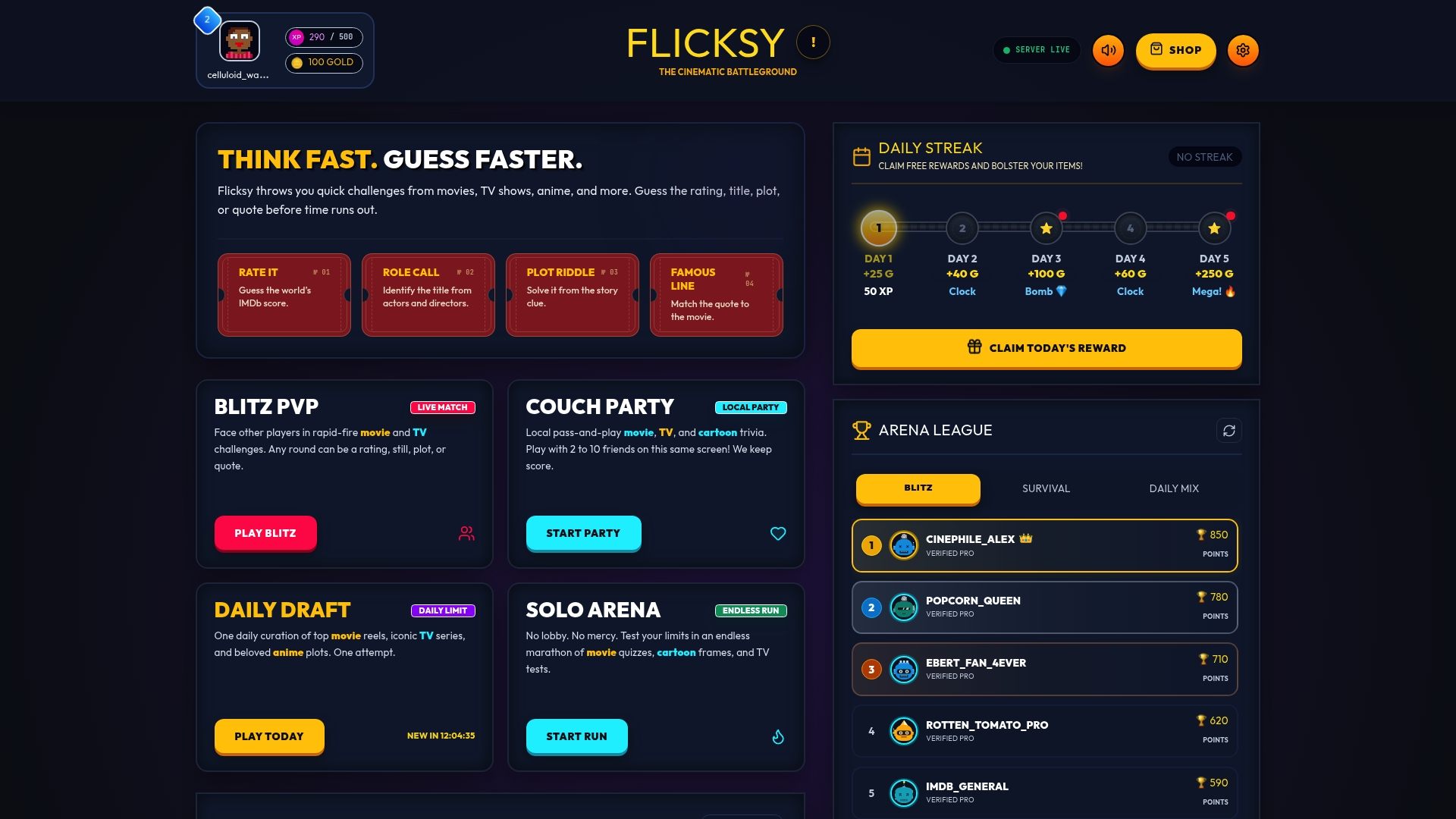
That's a real fit for anyone who read this far looking for a session style that matches their mood, whether that's a two-minute timed warm-up or a longer ladder climb chasing a personal best. And unlike a lot of trivia apps that treat solo mode as an afterthought, Flicksy built Solo Arena as a core piece of the experience, alongside Blitz PvP and Couch Party for when you're ready to compete.
If a training-wheels approach to a new game interests you, the same logic that applies to learning any competitive game's interface through low-stakes solo practice applies here: warm up alone, then bring that sharpness into a real match. Head to Flicksy, pick a category, and run your first timed round today.