

The quickest way to run a trivia game with friends is a live lobby you join by link, PIN, or QR code, up and running in about two to five minutes on a phone or laptop. For groups who love movies, TV, and anime, Flicksy works especially well because its Blitz PvP, Couch Party, and Solo Arena modes cover both a quick 1v1 and a full group night. Pick a mode, share the code, and start playing.
TL;DR:
- Fast setup is key, with creating a room taking seconds, but connection issues and poor WiFi can still cause delays during gameplay.
- Choosing the right mode depends on group size and energy, with blitz and small lobbies ideal for quick sessions and hosted styles better for larger, celebratory nights.
- Custom questions and well-balanced difficulty levels keep players engaged without favoritism, especially when questions are relevant to the group's interests.
- Scoring methods like flat points or speed bonuses impact game energy, with leaderboards boosting long-term engagement for recurring game nights.
- Flicksy's features, including 1v1, couch party, and solo modes, are optimized for fans of movie, TV, and anime trivia seeking quick, relevant, and repeatable gameplay.
Table of Contents
- Quick Options: The 4 Fastest Ways to Play Trivia With Friends
- How to Set Up and Start a Trivia Game With Friends
- Game Modes Explained and When to Use Each
- Picking Categories and Writing Great Questions for Your Friends
- Scoring, Leaderboards, and Keeping Competition Fair and Fun
- Engagement Hacks and Troubleshooting for Hosts
- Why Flicksy Fits Friends Who Love Movie, TV, and Anime Trivia
- What Actually Matters When You Host Trivia Night
- Start a Blitz PvP or Couch Party on Flicksy Tonight
- Helpful Links for Hosting Your Next Trivia Night
- Sources
Quick Options: The 4 Fastest Ways to Play Trivia With Friends
The format you pick depends less on the app and more on where your friends actually are: same couch, same city, or scattered across time zones. Here's how the four fastest setups break down.
- Remote lobby or party mode: One person creates a room, then shares a join code, link, or QR code. Everyone else taps in from their own device, often with video or voice chat running alongside the questions. This is the default for friend groups who don't share a living room, and it's how most fun trivia night sessions happen when half the group is out of town.
- Local couch party: One screen, usually a TV or laptop, displays the questions while everyone answers on their own phone. This "one screen plus phones" pattern is built for game nights where the group is already in the same room and wants something faster to set up than a board game.
- 1v1 blitz: Two players, one fast round, no lobby management required. This is the format for settling an argument about which Marvel movie came out first, right now, without organizing a whole group.
- Hosted, gameshow style games: A live host runs the show, calls out categories, and manages buzzers or team tables. Top Hat Trivia runs exactly this kind of night at bars and restaurants, with music clues and a live MC keeping the room engaged rather than just quiet and staring at screens.
If your group is under six people and everyone's free right now, blitz or a small lobby wins on speed. Bigger groups, especially ones that want some ceremony to the night, do better with a hosted or gameshow format.
How to Set Up and Start a Trivia Game With Friends
Getting from "let's play trivia" to actually playing takes longer than it should when nobody's thought through the basics first. This checklist cuts that gap down to a few minutes.
- Pick your platform and mode. Decide up front whether you want a fast 1v1, a couch party, or a bigger hosted lobby. Trying to switch modes mid setup is where most delays happen.
- Create the room. Most apps generate a PIN, a shareable link, or a QR code the moment you open a lobby. TriviaNerd and similar platforms build this step to take seconds, not minutes.
- Send the join info. Drop the code or link into your group chat. QR codes work best for in-person groups since everyone's already looking at the same screen.
- Confirm devices and audio. Make sure everyone has a working browser or app open and that microphones aren't set to broadcast a noisy kitchen to the whole lobby.
- Lock in the rules before the first question. Decide rounds, time per question, teams versus free-for-all, and how ties get broken. Nailing this down before play starts avoids arguments at question 12.
Pro Tip: Run a single test question before you tell everyone "we're starting." It catches dead microphones, laggy connections, and confused players in ten seconds instead of derailing round one.
Common snags are predictable: a player can't reconnect after their phone locks, latency causes a lobby to stutter, or background noise drowns out the host. Most of these fix themselves with a quick refresh, a wired connection instead of shaky WiFi, or a host muting everyone except whoever's talking.
Game Modes Explained and When to Use Each
Not every trivia night wants the same energy. Matching the mode to your group's mood matters more than most hosts realize.
- Rapid-fire or Blitz PvP: Speed is the whole point. Questions come fast, scoring rewards quick and accurate answers, and matches wrap up in minutes. This suits competitive friends who want a short, intense session rather than an hour-long marathon.
- Buzzer or gameshow style: First person to buzz gets the shot at answering, which brings real theater to the night. Riddler runs live multiplayer shows built around this exact mechanic, and it works great in small groups but needs firmer host controls once the lobby grows past a handful of players, since buzzer chaos scales fast.
- Team versus team or co-op: Players pool their knowledge instead of competing solo. Mixed-skill friend groups tend to prefer this because nobody's carrying the whole round alone, and it takes the pressure off the one person who never knows the sports questions.
- AI-generated or custom rounds: Personalized questions about inside jokes, shared history, or a specific fandom turn a generic quiz into something that only works for your group. CrowdParty's AI Party Mix generates prompts on any topic, and tools like Wedgie Trivia build entire rounds around "guess your friend's answer" style personalization.
Blitz suits a tight friend circle craving speed. Buzzer suits a group that wants drama. Team modes suit a mixed-ability crowd. Custom rounds suit anyone who wants the night to feel like it was made specifically for them.
Picking Categories and Writing Great Questions for Your Friends
A good round mixes difficulty instead of stacking easy wins or brutal stumpers back to back. A mix of easy, medium, and hard questions keeps both the trivia veterans and the casual players engaged instead of one group dominating the whole night.
- Build categories around what your group actually watches: movies, TV, music, or a specific fandom, then throw in one surprise round nobody saw coming.
- Source questions from AI generators, premade topic packs, or friend-submitted rounds, but double-check facts before the game starts. A wrong answer key kills momentum fast.
- Avoid stacking questions that share obvious clues, like three movie questions in a row that all reference the same actor. It makes the round feel repetitive even when the trivia itself is solid.
- Run a quick edit pass before hosting: cut duplicate answers, verify dates, and read every question out loud once to catch anything confusing.
Scoring, Leaderboards, and Keeping Competition Fair and Fun
How you score the game shapes how competitive it feels. Flat points per correct answer keep things simple and are easiest for casual groups. Speed bonuses reward fast, confident players and suit rapid-fire formats. Confidence wagers, where players bet extra points on answers they're sure about, add a layer of strategy for groups who want more than just trivia knowledge on the line.
- Flat points work best for casual, low-stakes nights where nobody wants to do math.
- Speed bonuses fit Blitz style formats where quick, correct answers should outscore slow, correct ones.
- Confidence wagers reward players willing to take a risk, which adds tension to team modes.
- Leaderboards and daily rewards give players a reason to come back the next night instead of treating the game as a one-off.
App store listings for social trivia apps commonly surface ratings and review counts that groups check before committing to a new platform for game night, and that same signal matters when picking where to host recurring sessions. Streaks and daily challenges work well for cumulative leaderboards across a season of game nights, while one-off gatherings do better with session-only scoring so nobody feels buried by a friend's three-month winning streak.
Engagement Hacks and Troubleshooting for Hosts
Pacing makes or breaks a trivia night more than question quality does. Keep rounds to eight or ten questions before a short break, and use a countdown timer or a snippet of music to signal when time's almost up. A host script doesn't need to be elaborate, just a quick "next round is movies, get ready" between segments keeps energy from sagging.
Latency and join issues are usually fixed by asking players to close other tabs or apps hogging bandwidth. Mute everyone except the host during questions, then unmute for discussion between rounds so cross talk doesn't drown out the reveal.
Pro Tip: If one player keeps derailing the game or hogging the buzzer, most hosted platforms let you mute or remove them from the lobby without ending the session for everyone else.
Why Flicksy Fits Friends Who Love Movie, TV, and Anime Trivia
Flicksy builds its whole platform around fandom speed instead of generic quiz banks, which matters if your group's idea of a great question is "name every character who died in the last season of your favorite anime."
- Blitz PvP delivers real-time 1v1 matches for players who want a fast, competitive round instead of a full group setup, and it plugs directly into a quick head-to-head match when two friends just want to settle something.
- Couch Party handles the one-screen, everyone's-phone-is-a-buzzer setup for in-person nights without extra hardware.
- Solo Arena gives players an endless challenge mode for practicing between group sessions or killing time solo.
- Daily rewards and leaderboards give players a reason to open the app again tomorrow instead of treating trivia as a one-time novelty.
Each feature maps to a real need this guide already covered: speed for competitive players, local play for in-person groups, and repeat engagement for anyone who wants trivia to be a running thing with their friends rather than a single night.
What Actually Matters When You Host Trivia Night
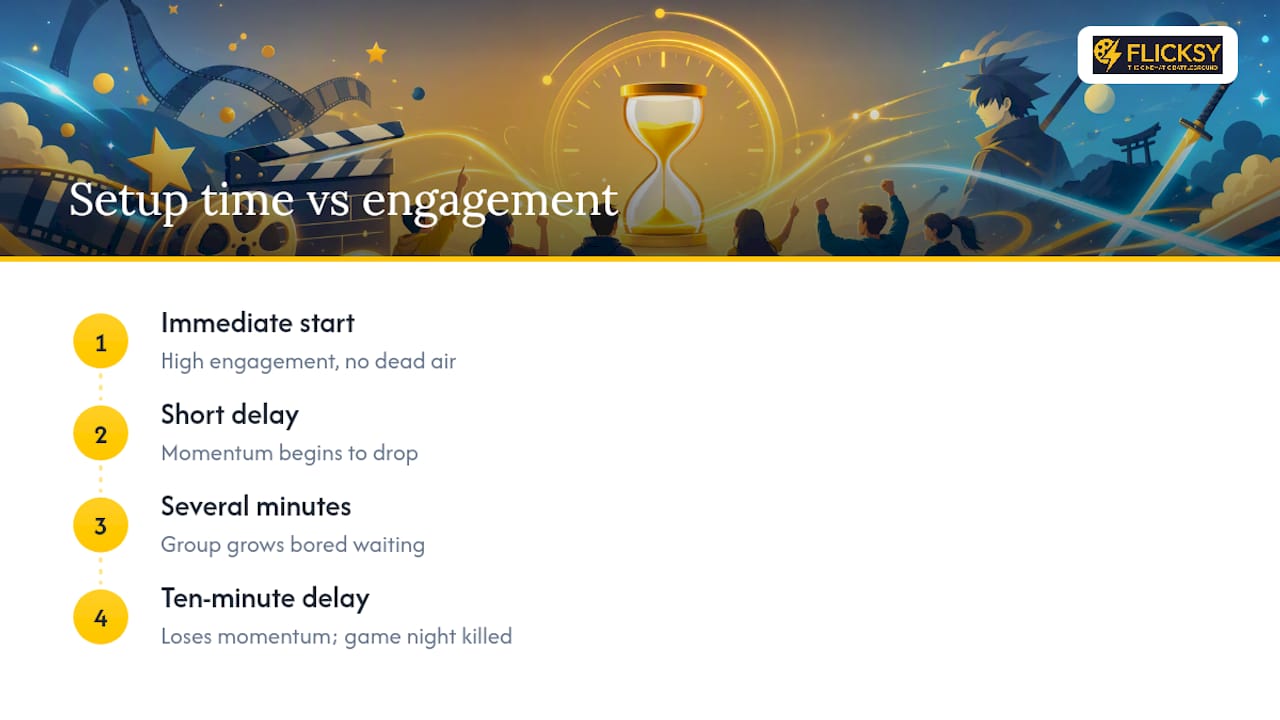
Most trivia advice obsesses over question difficulty and ignores the thing that actually kills a game night: dead air. A lobby that takes ten minutes to set up loses momentum before the first question even loads. Speed of setup matters more than the cleverness of your categories, because a group that's already bored waiting for a QR code to work won't care how good round three is.
The overrated piece of conventional wisdom is that bigger question banks make a better game. They don't. A tighter, well-mixed set of twenty questions your specific friend group actually cares about beats a generic thousand-question pack every time, because relevance drives engagement far more than volume does.
What I'd prioritize first is matching the format to the group's actual energy that night, not the format you used last time. A rowdy group wants buzzer chaos. A tired group wants a calm team round. Reading that correctly before you pick a mode saves more of the night than any amount of question prep.
— Aakash
Start a Blitz PvP or Couch Party on Flicksy Tonight
Flicksy is built for exactly the kind of night this guide describes: fast rounds, movie and TV and anime categories your friends actually care about, and setups that take minutes instead of a whole planning session. Whether you want a quick 1v1 or a full Couch Party with the group crowded around one screen, the app gets you into a game almost immediately.
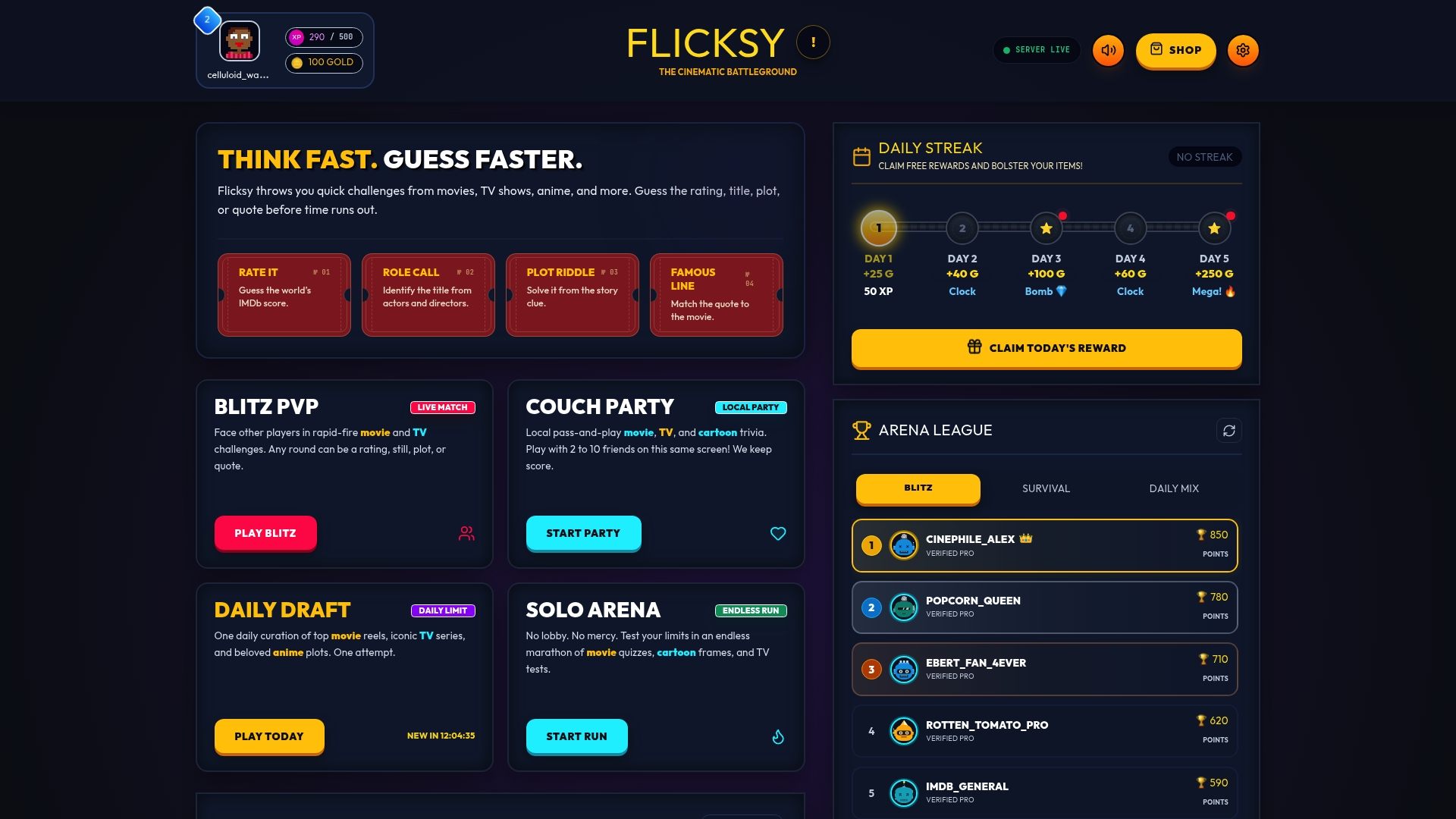
Head to the Flicksy landing page to open the app, pick Blitz PvP for a fast head-to-head match or Couch Party for the group, and share your code so friends can join in seconds. Solo Arena is sitting there too, for whenever you want to sharpen your reflexes before the next group night.
Helpful Links for Hosting Your Next Trivia Night
- Flicksy: Blitz PvP, Couch Party, and Solo Arena modes for movie, TV, and anime fans.
- TriviaNerd: Hosting tools and thousands of pre-made games for in-person or virtual nights.
- Riddler: Buzzer-based gameshow mechanics with live video and voice options.
- Top Hat Trivia: Find in-person hosted trivia nights near you.
- Pool Night Group Games: Pacing and group-game ideas for a mixed-activity evening.
Sources
- Play Trivia
- Top Hat Trivia | Find Fun Trivia Nights Near You
- Play, Host & Create Live Multiplayer Trivia Games | TriviaNerd
- Riddler: Live Multiplayer Trivia Game Show | Play Trivia Online with Friends